Strain is the other half of the daily loop. Recovery tells you how much your body can handle this morning; strain tells you how much load you have actually put on it since you woke up. It is one number, displayed as 0 to 100%, that accumulates through the day and answers the evening question: did I do enough, or too much? Strain is part of the free core loop Free.
What strain measures
Strain is whole-day cardiovascular load, not workout-only load. Three things feed it, all read from Apple Health:
- Per-workout heart-rate load. Every tracked workout contributes based on how hard your heart actually worked, for how long. Time near your max counts for far more than the same minutes at a stroll.
- Background heart-rate load. The hours between workouts count too. A day of hauling boxes up stairs registers even if you never pressed start on a session.
- All-day active energy. The energy your watch records you burning through general movement rounds out the picture, so a long day on your feet is not invisible.
The workout component builds on Banister TRIMP, a training-load concept exercise science has used for decades: load grows with both duration and heart-rate intensity, and intensity is weighted non-linearly, so hard minutes cost more than easy ones. Your max and resting heart rates personalize it, which is why the same run produces different strain for different people.
The strain ceiling
Strain never appears alone. Each morning your recovery score sets a recovery-adjusted strain ceiling: the amount of load that is optimal for you today. Green mornings raise it, red mornings lower it. The day is about filling toward the ceiling, not maxing the bar. Ending well under it on a green day means you left fitness on the table; blowing past it on a red day is how a bad week starts.
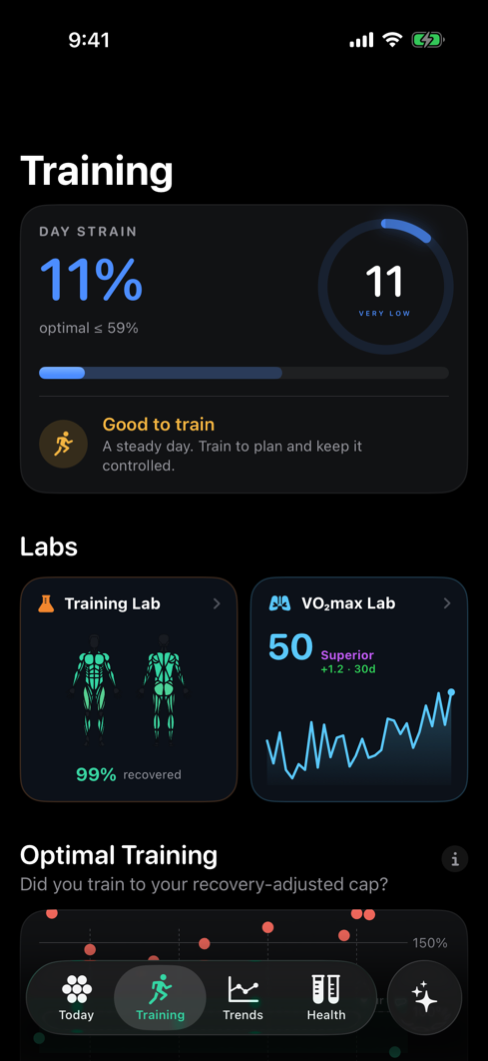
Live strain during workouts
While a workout is in progress, strain climbs in near-real-time, updating about every 30 seconds. You can watch the bar approach the ceiling mid-session and decide whether the next interval is worth it, instead of finding out after you have showered.
What counts, what doesn’t
| Counts toward strain | Doesn’t count |
|---|---|
| Workouts with heart-rate data | Logged workouts with no heart-rate data |
| Background heart-rate elevation between workouts | Steps alone, without heart-rate or energy evidence |
| All-day active energy from your watch | Anything Helix would have to invent |
Honest numbers
Strain follows the same honesty rules as everything else in Helix:
- Real heart-rate presence required. Strain is a cardiovascular measurement, so it needs a heart-rate stream behind it. Helix never fabricates a value to fill a gap.
- A tracked day never shows a cold zero. If your watch is on, your heart has been beating all morning, and a small floor keeps early-day numbers sane instead of pretending you have done literally nothing since waking.
- An untracked day shows a dash. No watch data means no strain number. You get a dash and a prompt to put the watch on, not a guess.